Family Histories

       Home       NEW Updates      About Us       Feedback      Historic Sites       Consultants          Contact Us       Terms/Conditions


BENNETT Joe & Nel  

Researched and compiled by Gordon Freegard  February 2025. Acknowledging information gathered from many sources including details and images from Aly Mollica  plus two oral history interviews with Nellie Bennett  conducted by Enid Conochie

Nel Lloyd was named after my mother Nellie. Her father was a cabinetmaker with no farming experience.

The family came to Western Australia from Tottenham in 1925, in the Group Settlement Scheme. Her father had heard about it in London through Australia House. Nel was twelve years old.

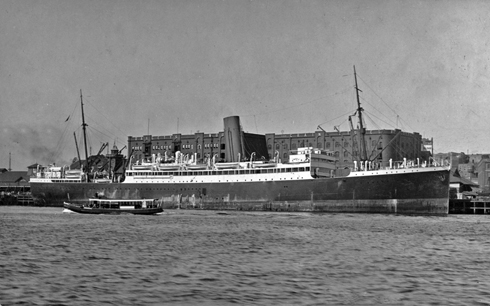
They waited and waited until they finally were invited out. They thought it was wonderful... coming over in a big liner 'The Diogenes' and landing in a big country like Australia.

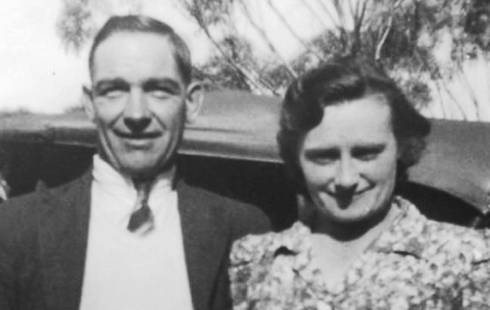
JOE & NEL BENNETT           #1
 

  THE "DIOGENES"        #2
 

It was April when they left Tilbury Docks and  arrived in Albany in July. On the same ship as the Russells, the Raven Hills, the Pitticks, and the Pittams.

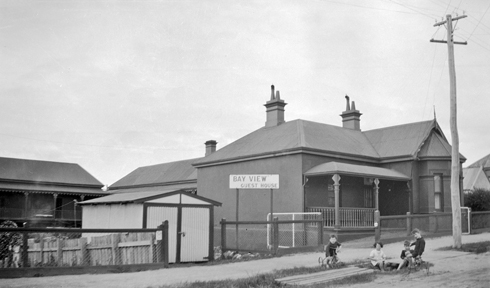
They stayed the first night in Albany at a Guest House. Because they came out with no furniture or anything, the parents had to shop for mattresses, pillows, beds, stretchers, and blankets. The next day they took the train to Denmark with all their gear and stayed the night at Clarkes Guest House... which had plenty of fleas.

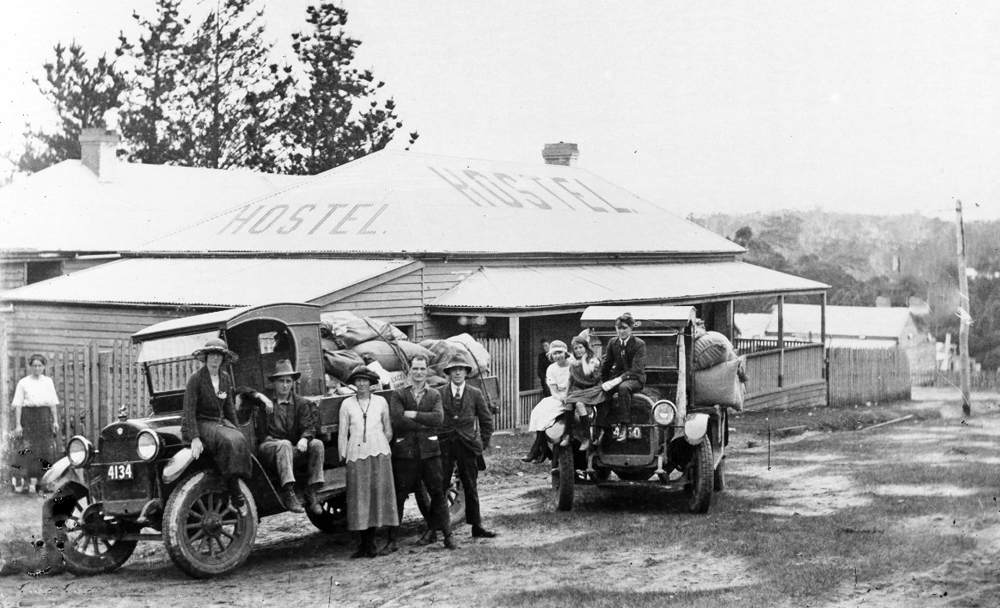
The following morning their stuff was loaded onto what was called a Reo truck in those days. Her parents sat in front with the driver and the three children sat on top of the load. They were taken out to Somerset Hill near Denmark to the block where we to settle.

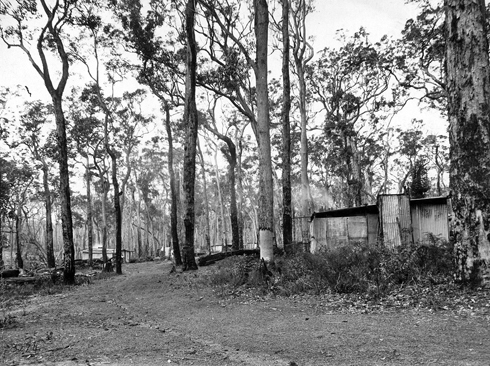
All their belongings was dumped there, and they lived in a shack until their bungalow was finished. The shack was made of corrugated iron and had a dirt floor. They had to improvise a table and chairs out of kerosene and petrol packing cases. They only had hurricane lamps, and all the water was carried up from the creek running close by

They were now with a group that was already settled and the land had already started to be cleared. Men were formed into groups to do this and the fencing. The whole idea of a group settlement was to fit every man out with 25 acres of pasture fenced, and that was when he started to get on his own and start farming.

     BAY VIEW GUEST HOUSE        #3
 

GROUP SETTLERS OUTSIDE DENMARK HOSTEL          #4
 

  TYPICAL GROUP SETTLERS ACCOMMODATION        #5
 

It was a three-mile walk to school through the bush. The little bush school was vastly different from her school in England (which she adored) and she didn't like it. Many children went barefooted, but Mum and Dad wouldn't let us go barefoot.

The family was granted ten milking cows; but they weren't all milking when they got them, they were in calf and had to wait. In the meantime a four-bail cow shed was built by the Department.

Then of course they had to learn how to milk. One of the Mr. Suttons taught Nel. She was thrilled to be the first to learn on our block and rather liked it. They used to separate the milk by hand separator, the cream went into the Denmark Butter Factory two or three times a week.

Nel is not sure know how long they were at Somerset Hill, but they were in a gully and the situation didn't suit her mother. She started to become sick, so her father put in for a block in a higher position.


The new block still in the Scotsdale area but up on a hill was already cleared and had a bungalow, cowshed, and dairy on it. But it needed fencing, so instead sending the children to school Dad kept them home to do chores and help.
Nel doesn't know why her Dad didn't get into trouble for not sending them to school, but the same thing was happening on other blocks. Of course they didn't mind and thought it was great being away from school.

"Dad was the boss of Nel and a boss over Mum too, Mum didn't have much say about us children. She wanted us to go to school but Dad was the boss."

The children used to help with the fencing, debarking the posts with the back of an axe, putting the posts in place, running the wire, tying the netting onto the wires, and knocking the posts in with a nice size stick. It was a frightfully tedious job. Her Dad and her brother who was a year older, dug the post holes.

There was also more clearing to be done. Ring barking the big trees and chopping and sawing down the smaller trees. There was a mixture of hazel bushes, wattle, karri, red gum, and jarrah trees, a mixture.

Nel and her sister would slash the scrub with a fishhook slasher by hand. You couldn't see through the scrub it was so dense, some of it up to 12 feet high. It was a full-grown man's job but it didn't do them any harm. They actually enjoyed it.

Their bungalow was typical of a group settler house. Four rooms, all the same. The front room and kitchen were lined with tongue and grooved jarrah, the two bedrooms were unlined. It was on stilts and exposed to terrific winds. It was frightening when they would come up across the paddock. The ringbarked trees would drop limbs, bark and even fall over. The house used to shake because of the wind.
As well as cows they kept pigs who drank the skim milk with pollard mixed into it. It was a heavy job carrying kerosene tins full of milk and pollard down to the pigsty. They weren't allowed to have the pig styes close to the dairy for hygienic reasons.

There were a terrible lot of fleas in those days, they had them in our bungalow, and Nel thinks maybe they had them worse than ever 'cos her father let the pigs sleep under the house! Her poor old Mum used to take the blankets off the beds, put them on the clothesline and stand there killing the fleas.

Unfortunately, one day Nel's brother left home as he and her father couldn't get on, and that left Nel and her sister.

In 1936 a wasting disease in the cattle meant they lost herd after herd of heifer calves, that they had reared and tried to build up their milking herd. It was heartbreaking and they found out later due to a cobalt deficiency.
In 1937 a big fire went through Denmark, which did huge damage. They family were over at the Woodwards for the day, and both being on hills they could see their place going up in flames. So of course, they raced home in their horse and cart.
Just as they went passed the hay shed, it collapsed, all the hay was gone. They could hear the corn popping in the cream can in the shed as it got hot."
By an act of God
the house was left but most of the sheds were lost, including the cowshed. Luckily, no stock was lost but they had twenty odd cows milking at the time that had to be tied up to the fence and hand milked. They had got used to being machine milked, so they didn't take too kindly to it.
The family
had a rough patch after that. Nel's Mum really didn't like it in Australia, she didn't like it at all. After the fire she wanted to move on instead of starting again, but her father was determined to make himself a farmer.
Nel
used to get out a little bit. Her father bought her a bicycle and she used to ride to play hockey and tennis. Once a week she would drive the horse and cart into town to take the cream to the factory and do the shopping.

Nel also used to go to the dances at Scotsdale and now and again go into the pictures in Denmark. Billy Kingston used to run a bus. He'd take them in and bring them home again. Nel, her mother and  sister, were members of the CA and they used to put on concerts in which they would take part. Nel can clearly remember being an Irish maid in a play and singing 'Play to me, Gypsy' with two other girls.
Nel's
sister left home when she was about twenty. Like her brother she also clashed with Dad. Then Nel was the only child left.

There were times when she wanted to get away to see a bit more of life, but she didn't like to leave Mum because she knew she would have a lot more work to do if she left. The mother would help feed the calves but otherwise she was fully busy inside. She had vowed and declared she would never milk a cow, so she never learned to milk. It frightened her.
From time-to-time,
the mother would get her little holidays away to stay with her two brothers on a group settlement in Pemberton, but the children never got away anywhere.
At
 twenty-eight Nel decided to leave home, but it wasn't because she didn't get along with her Dad. Her Mum and Dad were lucky enough to get a young lad from one of the other groupies to come and help them on the farm. So she didn't feel so bad and Mother was actually glad Nel was getting away.
Nel
went to work for a lady on a farm out from Mount Barker for two years. She was rather mean to her, so Nel joined the Army and waited to be called up. But that didn't happen and she got tired of waiting, so went to work in the Woollen Mills in Albany

After that Nel married Joseph A. Bennett in 1945 and had their first child the day after her father died. She was in hospital giving birth, so she didn't see the last of her Dad, and he didn't get to see her baby. Nel thought he should have lived a bit longer, but he didn't look after himself.
Her
Mum came to live with them. They went from Albany to Williams from Williams to Tenterdon from Tenterdon to Gnowangerup and then we stopped.
 
They
were all such a happy family together and her Mum loved it because she was having babies. She reconciled with Australia and never wanted to return to live in England. She died aged 72 in Gnowangerup.
Regrets?
Nel never had any regrets about coming to Western Australia, and she has never gone back to England because she doesn't fancy flying.
And yes it's always nice to visit Denmark and
she has been down to the block a couple of times to have a look around. But it's different there now, and there's a padlock on the gate.

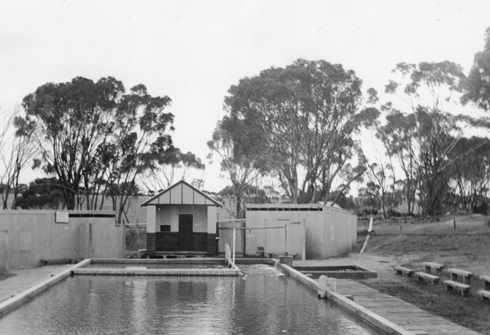
Joe had many, different jobs around Gnowangerup and neighbouring towns, on farms etc. In the 50's, the whole family lived at the Gnowangerup swimming  pool where he was caretaker for a stint. They lived in a small house up on the hill behind the pool on the Gnowangerup-Broomehill road.

He also worked (& again the family lived in a tent) at the Albany Whaling Station for a season when the two boys were in Primary School.

      GNOWANGERUP SWIMMING POOL      #6
 

Opposite the Denmark museum is the CWA hall which is actually Nel's old house she lived in as a child with her mum, dad and siblings on Scotsdale road on their farm - known to locals at the time as Lloydies Hill (Lloyd was their surname). Not sure when or why but their house was transported into town to be repurposed and became the now CWA Hall

Wes Thomas:  I may have said before, Joe gave me some instructions on learning to swim, so l could graduate from Mugs Alley to the main pool.

Every endeavour has been made to accurately record the details however if you would like to provide additional images and/or newer information we are pleased to update the details on this site. Please use CONTACT at the top of this page to email us. We appreciate your involvement in recording the history of our area.


References:                 Article:       Aly Mollica

                                  Image:    1, 2,, 3, 4, 5  Aly Mollica
                                                 6      U. Abbott


Copyright : Gordon Freegard 2023 - 2026